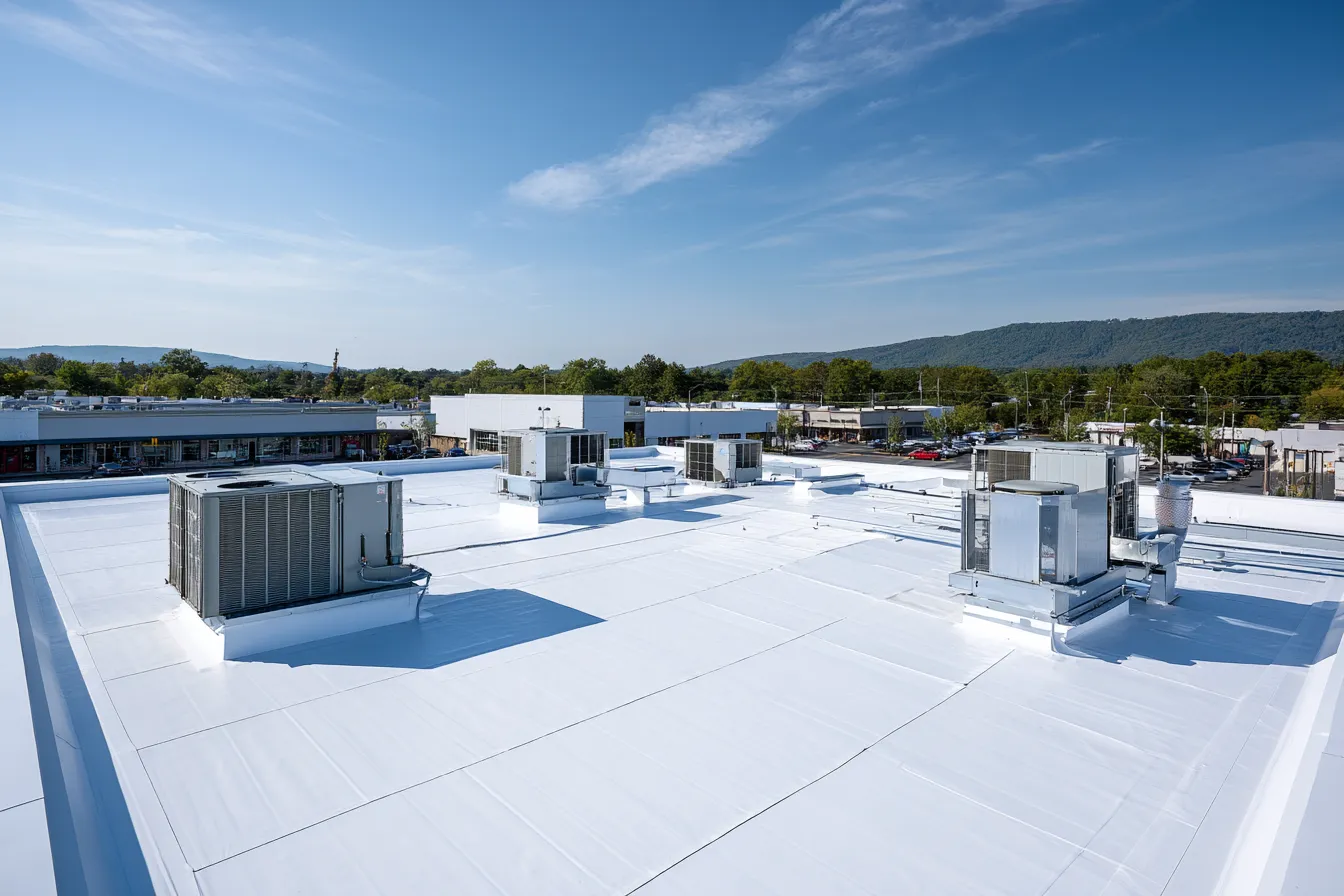
Commercial Roofing in Allen, TX
Commercial buildings around Allen mostly sit under a flat or low-slope roof that hides its wear from the parking lot. A local roofer grades the membrane by hand and gives you one written number.
- No pressure, no closing pitch
- An honest repair-or-replace answer
- One local roofer, start to finish
Call (972) 737-4865
Restore it or replace it: the call an Allen flat roof turns on
The costliest mistake on a commercial roof is coating one that needed a tear-off, or tearing off one a coating could save. Around Allen that call turns on one thing a parking-lot walk cannot tell you: whether the insulation under the membrane is still dry, or water has worked in and stayed.
So the first read is a moisture check, not a guess at the surface. A roofer tests the insulation, grades the seams and drains, and leaves a dated photo on every weak spot before a number is named. It starts with a free inspection.
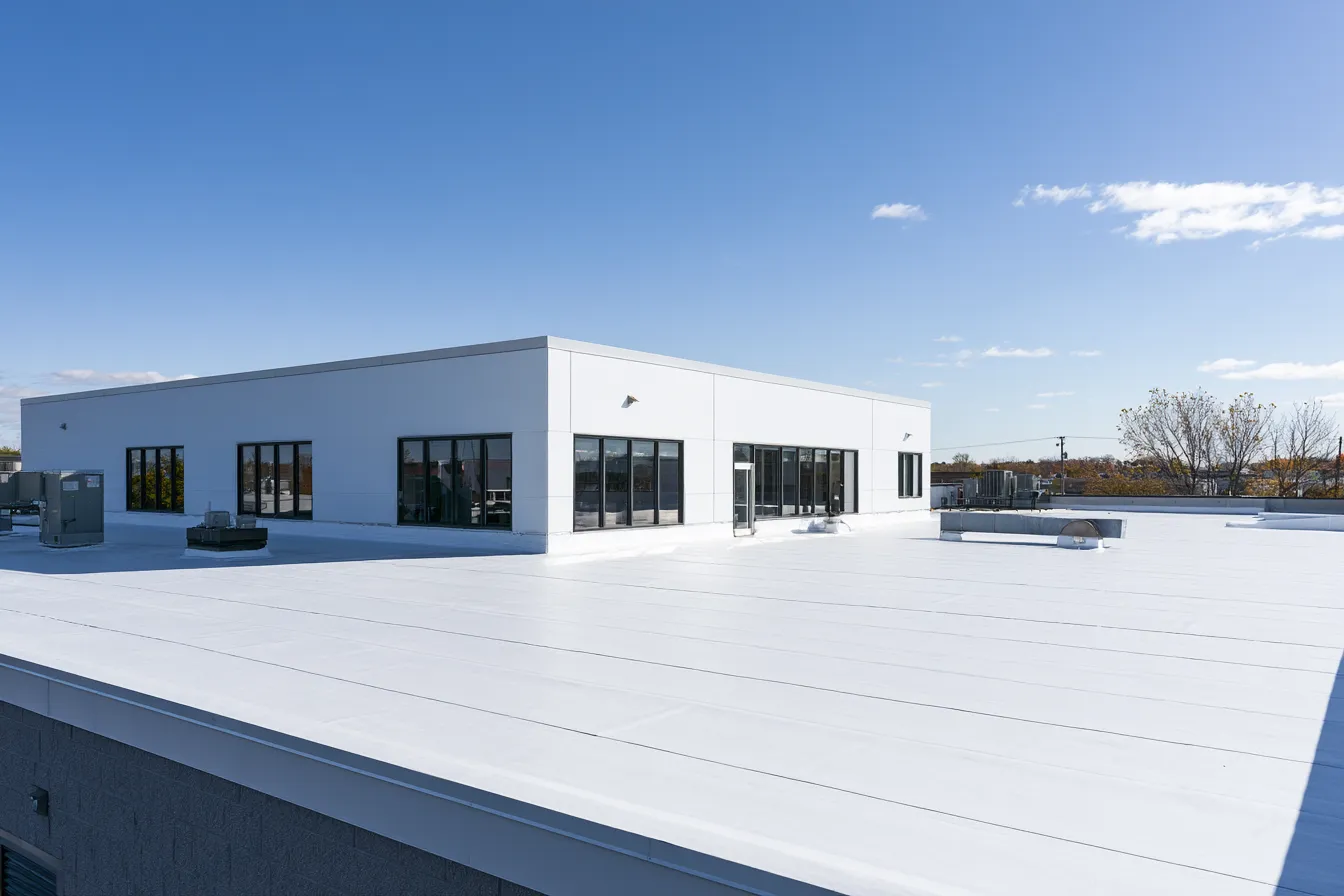
Flat-roof systems local roofers install and service around Allen
There is no universally best flat roof; the right one is whatever fits the building. What settles it is how the deck drains, how much traffic the membrane takes for rooftop equipment, whether kitchen or shop exhaust crosses it, and how long you plan to own the place. These are the low-slope systems local roofers install and service on Allen buildings, matched to yours only after the roof is read and documented.
TPO
A light thermoplastic sheet welded at the seams with hot air, and the default when a newer Allen office or store goes to a flat roof. The pale surface reflects the North Texas sun, which can take some load off the air conditioning below.
Take a closer look →EPDM
A black synthetic-rubber sheet chosen for endurance over appearance. It logs decades of low-maintenance life on wide, open decks, which is what makes it a fit for warehouses and the aging light-industrial buildings along US-75.
Take a closer look →PVC
A heat-welded membrane whose stand-out trait is chemical resistance: grease, animal fats, and cooking oils do not break it down the way they do other sheets, which is why restaurants and any building venting kitchen exhaust onto the roof reach for it.
Modified bitumen
Reinforced asphalt applied in layered plies, a puncture-tough workhorse that handles foot traffic and the odd pooling spot, which makes it a common pick on smaller roofs that get walked often for equipment upkeep.
Built-up roof (BUR)
The original built-up roof, tar and gravel stacked in overlapping plies. It is heavy and labor-intensive, but its century-long track record is why you still find it holding up on older Allen commercial buildings.
Roof coatings
A sprayed or rolled silicone or acrylic layer that renews a worn but still-sound roof, adding a reflective, usually warrantied skin for a fraction of what a full replacement costs, provided the roof underneath actually qualifies for it.
Take a closer look →Cannot name what is overhead, or whether the last hailstorm did more than the ground shows? That is the whole point of the read: a roofer identifies the system, grades how much life it has, and documents it before you spend on a repair or a re-roof. Any storm damage is dated against the Collin County hail record on the same visit.
What a commercial roofing job around Allen covers
Full re-roofs, targeted flat-roof repair, coating restoration, and an honest call on which of the three your building actually needs.
- 01The restore-or-replace call
- Rooftop traffic, moisture in the insulation, the state of the deck, and how long you will hold the building settle whether a coating buys real years or a tear-off is the right move. A roofer tests before recommending, not after.
- 02Targeted flat-roof repair
- Individual failures fixed in place rather than the whole roof: a low spot that ponds, a clogged drain, a seam pulling apart, worn wall flashing, or a leaking collar at an HVAC curb or pipe, matched to the existing membrane.
- 03Coating restoration, gated
- A coating is a real, money-saving renewal on a roof that is dry and sound underneath, and nothing but a cover-up on one that is not, so a candidacy test comes before a roof coating is ever quoted.
- 04Full re-roof or new membrane
- A complete new low-slope system, single-ply TPO, modified bitumen, or a built-up flat roof, sized and fastened to the deck for wind, once a roof is finished and no repair is worth carrying it further.
Storm damage on a flat roof follows the same path as on a house, it is just harder to spot from below: a roofer records and dates it, then explains a commercial insurance claim in plain terms if the damage is worth filing on.
How an Allen commercial roof job runs, in order
Moisture-tested first, put in writing before anything is booked, and worked around your open hours.
Test and document the whole roof
A roofer starts with a moisture check on the insulation, then works the drains, the seams, the wall flashing, and every rooftop collar, and comes back with dated photos and a single written figure. Neither the plan nor the price moves until both are in your hands.
Settle repair, restore, or replace
Coat it, repair it, or replace it, the sound choice gets laid out in plain language with the reasons behind it, and the figure is locked in before any crew is scheduled. Which path the building takes is yours to pick, not ours to push.
Build it, then verify in writing
The crew installs the membrane or completes the repair to the written scope, then the seams, flashings, and drains get a closing check. The workmanship terms are put in writing for the file, and any manufacturer coverage follows the full system that went on.
Allen commercial roofing questions
What Allen building and property owners ask before a flat or low-slope roof goes on file.
Q1How do I know if my flat roof needs replacing or just a coating?
Q2What is the most common flat roof around Allen, and why?
Q3My ceiling is staining but the roof looks fine from the lot. Where is the leak?
Q4Does a reflective white roof really cut cooling costs?
Q5Is hail damage on a commercial roof covered by insurance?
Q6Who covers the warranty on a new commercial roof?
Put your Allen commercial roof on file
A flat commercial roof hides its wear where the parking lot cannot see it. A local roofer runs the moisture test, grades every seam and flashing, prices repair, restoration, or a full re-roof into one written figure, and schedules it around your open hours. Bring the building to Allen Roofers; nothing is owed for the read, and nothing begins until you say go.