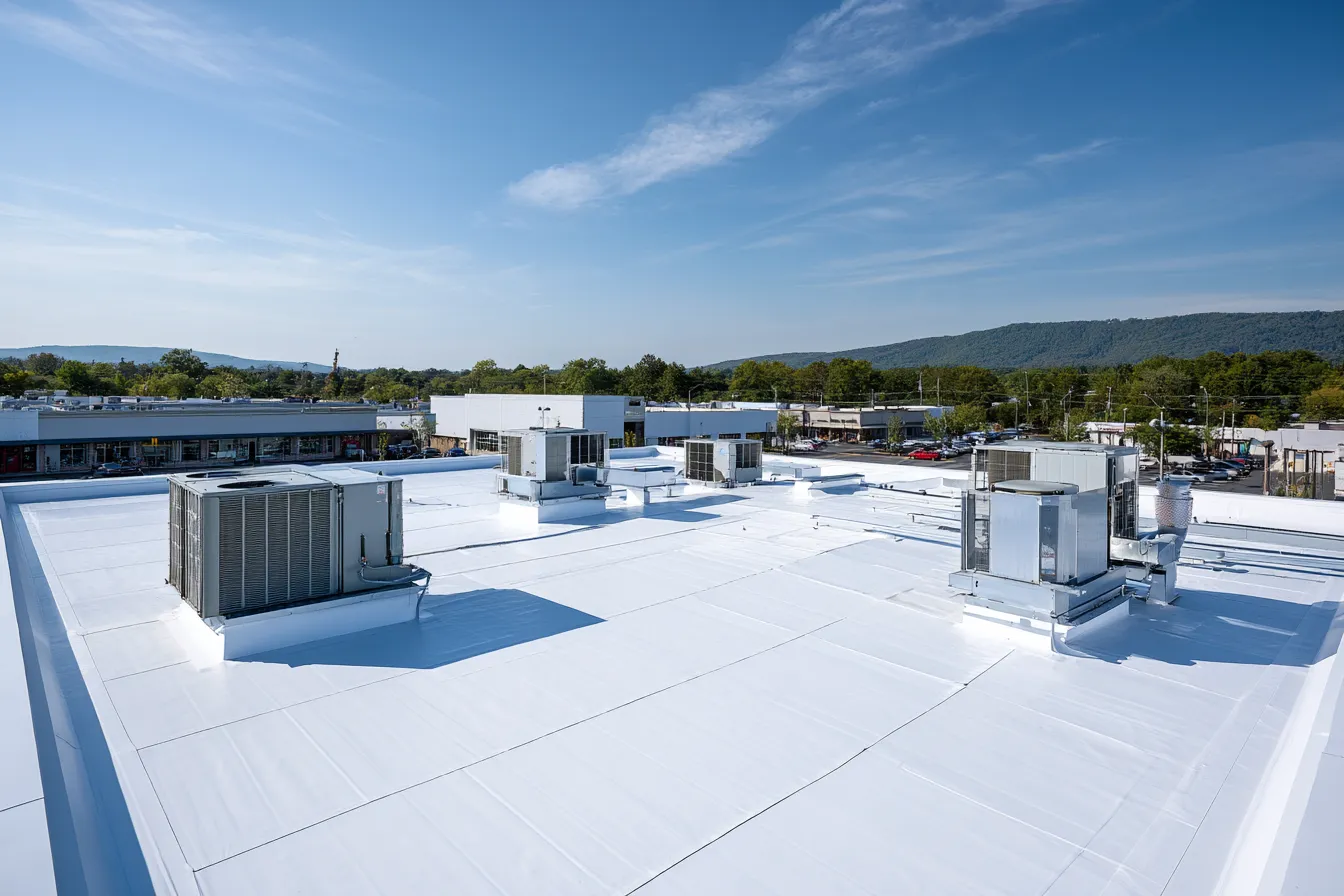
Commercial TPO Roofing in Allen, TX
Drive the US-75 corridor and most of the newer flat roofs are TPO, a bright single-ply sheet whose overlaps are welded shut with hot air. Commercial TPO roofing in Allen, TX comes down to two things: the mil you specify and how clean those welds run.
- The mil and the weld quality, both on the estimate
- Rooftop units flashed, not just the open field
- One figure, timed to your budget cycle
Call (972) 737-4865
Where commercial TPO roofing fits an Allen, TX building
TPO stands for thermoplastic polyolefin, a mouthful for a simple thing: a flexible plastic sheet, usually white, that a roofer rolls across a low-slope deck and fuses at the laps with a hot-air gun instead of glue or tape.
Two jobs, then: keep the weather out and take heat off the conditioned space below. A commercial roofer measures the deck, specs the sheet thickness, runs and probes every weld, and seals each curb and pipe, and the whole of it lands on one written estimate before you owe a cent. Begin with a free inspection.
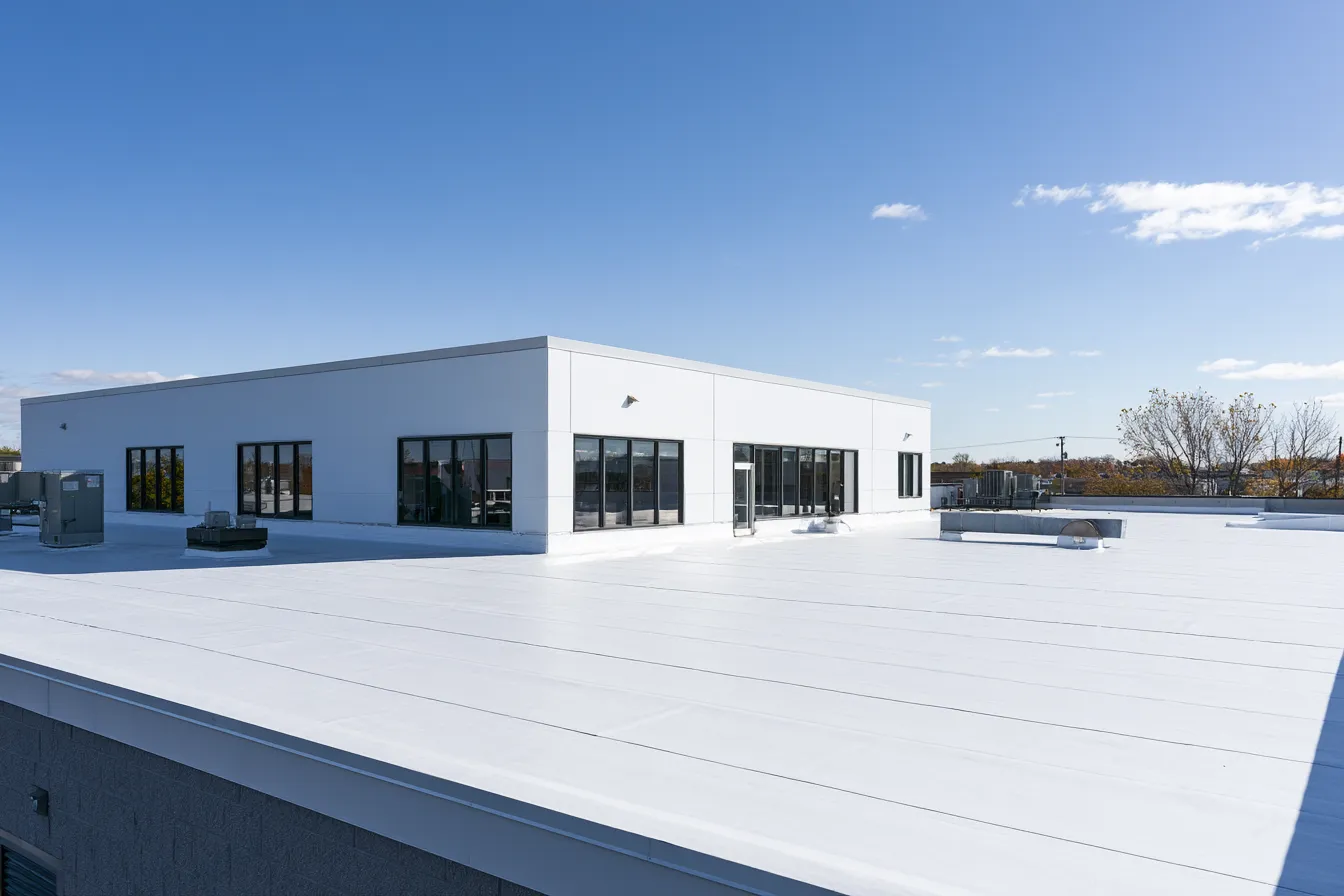
What goes on the estimate for a TPO roof
Grading an old TPO roof or specifying a new one both reduce to a handful of decisions you can follow before a price is attached.
- 01Sheet thickness, in mils, picked for hail and traffic
- TPO is sold by thickness, measured in mils, running from 45 at the thin end to 80 at the heavy. Stepping up to a thicker sheet buys real resistance to hail bruising, dropped tools, and years of sun, so on a multi-tenant roof walked constantly for HVAC service, or in a hail county like Collin, the heavier membrane tends to earn back its cost over the builder-grade minimum.
- 02Welds that get probed, not just run
- The laps are the whole ballgame on a single-ply roof, because the field of the sheet almost never gives out first. A roofer fuses each seam with hot air, then drags a probe along the finished bead, since a lap that cooled before it fully welded can look shut and still open under the next storm.
- 03Fastened down or glued down, sized to the wind
- A TPO sheet is either mechanically attached, held to the deck by screws and plates set through the insulation, or fully adhered, bonded across its back for a flatter surface that fights wind uplift better. Out on the open North Texas plain that wind exposure often argues for the adhered system; the deck and the budget weigh in too, and the choice belongs on the estimate, not on the crew's call that morning.
- 04The insulation, and the R-value it sets
- The membrane is only the top layer. Below it sits rigid insulation board that carries the roof's R-value, its power to slow heat passing through, and that board also gets tapered to steer water toward the drains. A re-roof is the one affordable moment to lift a thin R-value or build slope into a dead-flat deck, so the insulation is part of the spec rather than an afterthought.
- 05The cool-roof question, checked against the code
- White TPO bounces sunlight, which can shave the rooftop heat and the air-conditioning load across a long Texas summer. Whether the current energy code actually demands that reflectance on a re-roof is a local matter, so a roofer reads it straight off the adopted code instead of assuming it cuts either way.
Damage to a flat roof stays out of sight from the lot below, a hail bruise or a parted weld that a pitched roof would show off. What storms leave on a low-slope membrane is laid out on the Collin County hail record page, and the drainage half of the same roof is covered on the flat roof and EPDM guide.
TPO questions from Allen building owners
What an owner or facility manager weighs before a TPO membrane goes onto an Allen roof.
Q1Why is TPO on so many of Allen's retail and office roofs?
Q2What mil should I put on my TPO roof?
Q3Mechanically attached or fully adhered, which install?
Q4Does the white roof actually lower cooling bills here?
Q5A restaurant tenant vents grease onto the roof. Still TPO?
Q6How many years will a TPO roof give me?
Put a number on your Allen TPO roof
A TPO roof stands on its welds and the thickness someone picked for it. Send the building to Allen Roofers, and a local commercial roofer grades the membrane and the seams, calls the mil and the reflectance, and hands you one scope and one figure to sit on until you say go. The read costs nothing.