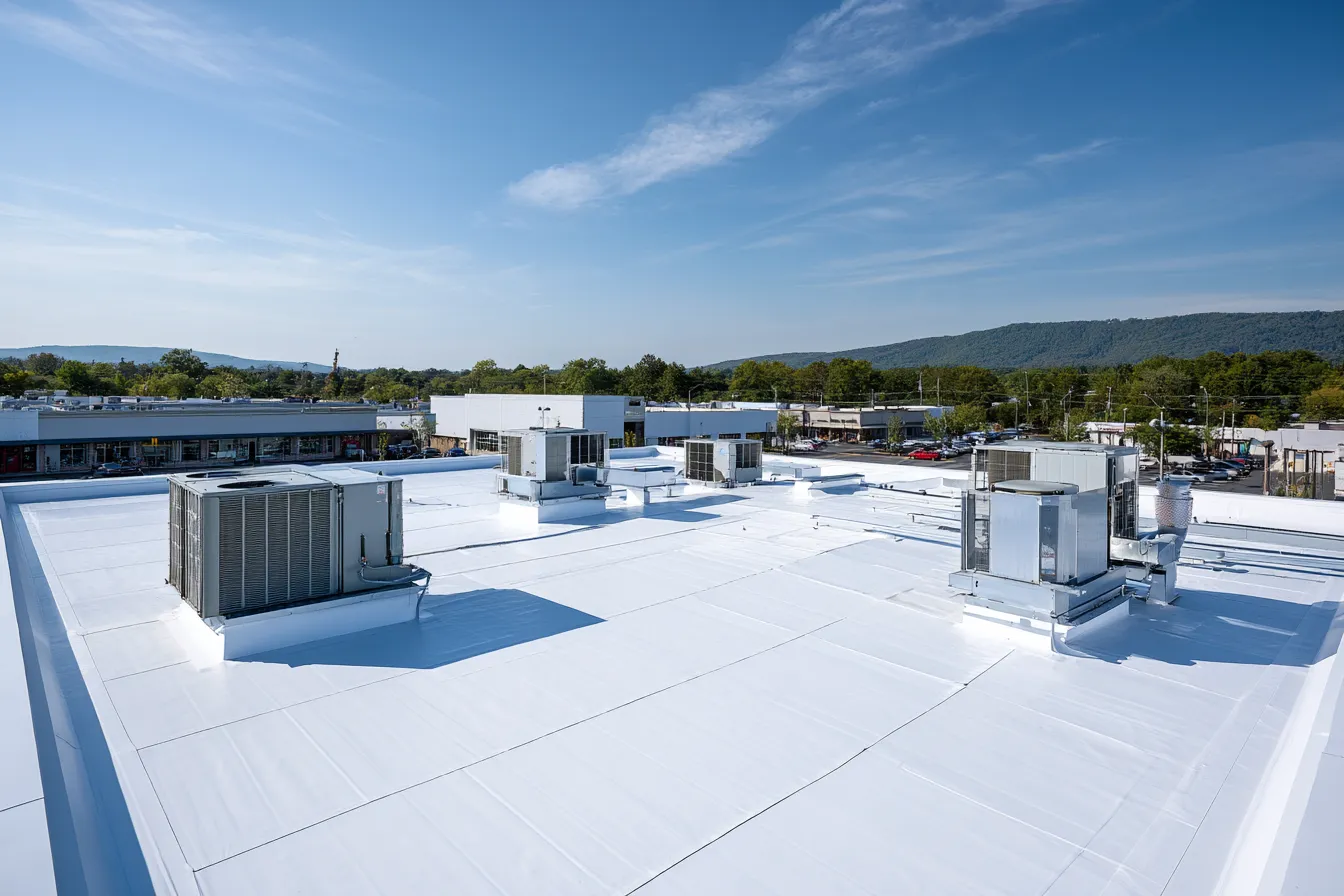
Commercial Flat Roof in Allen, TX
A commercial flat roof in Allen, TX is a low-slope deck pitched to walk water toward its drains. It fails where water pools and at every cut in the sheet, so a roofer walks drainage and the transitions first.
- Drains and transitions walked before a price
- TPO, EPDM, PVC, or mod-bit named to fit
- Repair, recover, or tear-off, spelled out
Call (972) 737-4865
What a commercial flat roof deals with in Allen, TX
Call it flat and it still has to drain: a low-slope roof carries just enough pitch to move water to its outlets. Nearly every kind of commercial building around Allen wears one, and each lasts exactly as long as the water keeps leaving it.
The pressure here is a fast North Texas downpour and the Collin County hail that rides in with it, not a hard freeze. A commercial roofer walks the drainage, the seams, the tie-ins where one roof section meets another, and every rooftop penetration. That walk is documented before anyone prices a repair or a replacement.
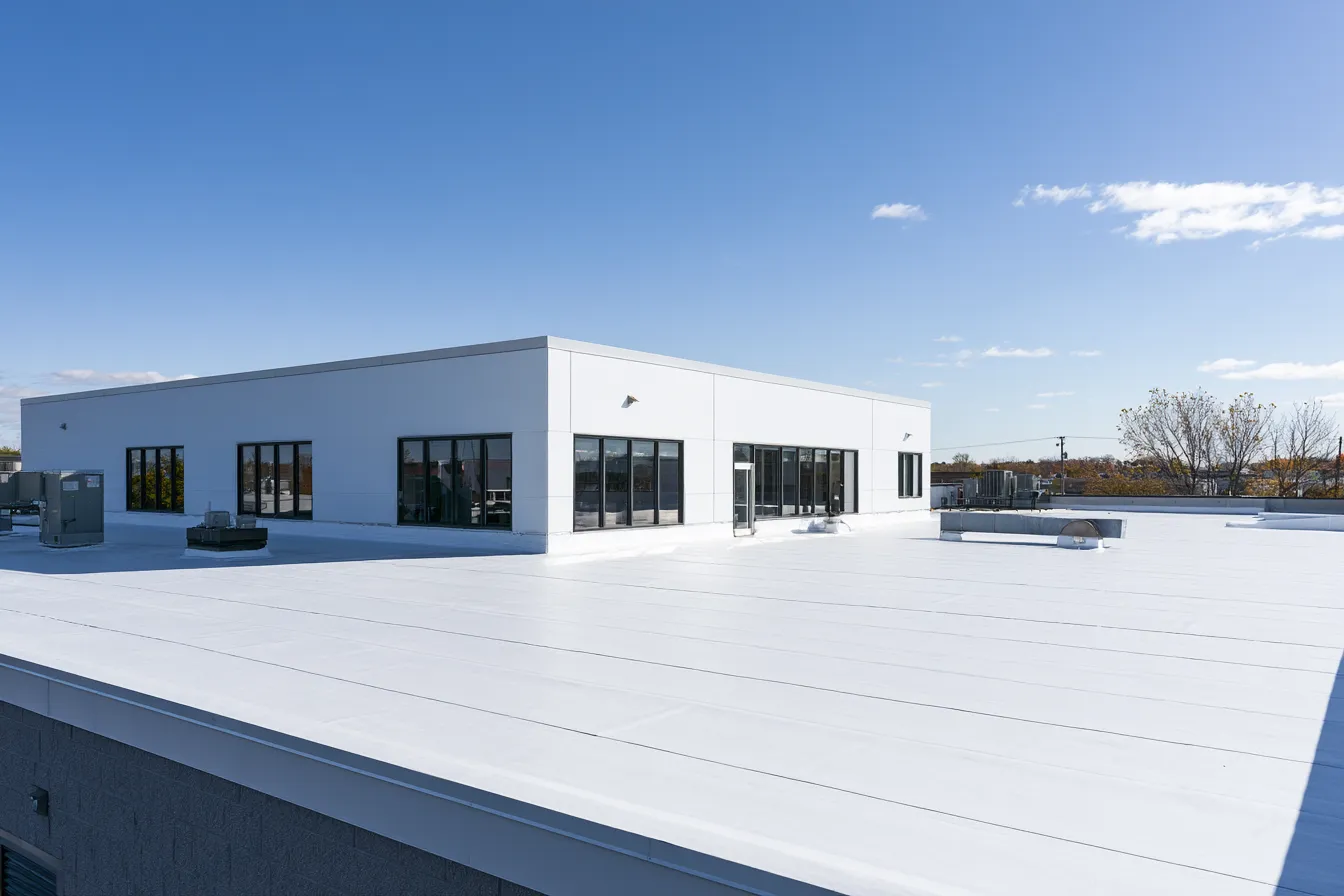
What the flat-roof walk decides
Repair, recover, or full tear-off, the call rests on a short list an owner can follow as a roofer works through it, before any figure appears.
- 01Drainage that keeps up with a Texas cloudburst
- A low-slope roof only works if water leaves it, so a roofer confirms every drain, scupper, and downspout is genuinely clearing. Code assumes a primary drain will clog someday and expects backup overflow to carry the water when it does, which proves its worth when a North Texas storm drops an inch in an hour. Water that lingers, called ponding, is the first thing that wears a flat roof out, loading the deck and pressing on every seam it sits over.
- 02The membrane, named for the building
- Four low-slope systems cover almost everything in Allen, and the honest move is to name the one the building needs, not a favorite. Welded white TPO reflects sun on a conditioned box. Black EPDM rubber runs cheap and long across a wide, open warehouse deck. PVC goes where a kitchen or shop vents grease. Modified bitumen, asphalt in reinforced rolls, is tough underfoot on a small roof serviced often. The TPO page digs into the single-ply choice.
- 03The tie-ins where roof sections meet
- A retail center or office campus is seldom one clean plane; it is several roof areas at different heights, stitched together at walls, expansion joints, and parapets. Those junctions, where two membranes or two roof ages meet, are where leaks tend to begin, so a roofer details each tie-in rather than signing off on the open field alone.
- 04Recover versus tear-off, and the two-layer rule
- Going over the existing roof once, when it is dry and sound, saves the labor and dumpster cost of stripping it. But code stops you from recovering a roof that already holds moisture or already carries two layers of roofing; at that point it has to come off to the deck. So a roofer counts the layers and checks for trapped water before ever recommending a recover, since stacking over a wet roof just buries the problem.
- 05Curbs, pipes, and parapets, sealed one by one
- Every vent, pipe, and HVAC curb is a hole cut through the sheet that has to be sealed, and the parapet wall around the edge has flashing of its own to fail. The more equipment a roof carries, the more of these details there are to keep watch on, so a roofer flashes each one and confirms water still finds its way past it to a drain.
Hail hits a flat roof just as hard as a pitched one; the difference is that a bruised sheet or a parted seam stays invisible from ground level, a full story down. A roofer gets on the deck, photographs and dates the damage against the Collin County hail record, and where the membrane is worn but still sound, the roof coatings page covers renewing it short of a tear-off.
Flat-roof questions from Allen owners
Plain answers on drainage, membrane choice, and vetting a roofer for an Allen low-slope roof.
Q1Why won't my flat roof drain, and why does water sit on it?
Q2TPO, EPDM, or PVC, which flat roof suits my building?
Q3Texas doesn't license roofers, so how do I vet a commercial one?
Q4Can I go over the old roof, or does it have to come off?
Q5Why do the leaks keep starting where two roof sections meet?
Q6If hail hits my flat roof, will insurance pay for it?
Get a read on your Allen flat roof
A flat commercial roof keeps its wear a story above the parking lot, out of sight until it drips. Put the building on file with Allen Roofers, and a roofer clears the drains, walks the seams and tie-ins, and prices a repair, a recover, or a full tear-off on one page. The read is free, and you can move on it now or fold it into next year's budget.